Welds
Cold or Skipped Welds
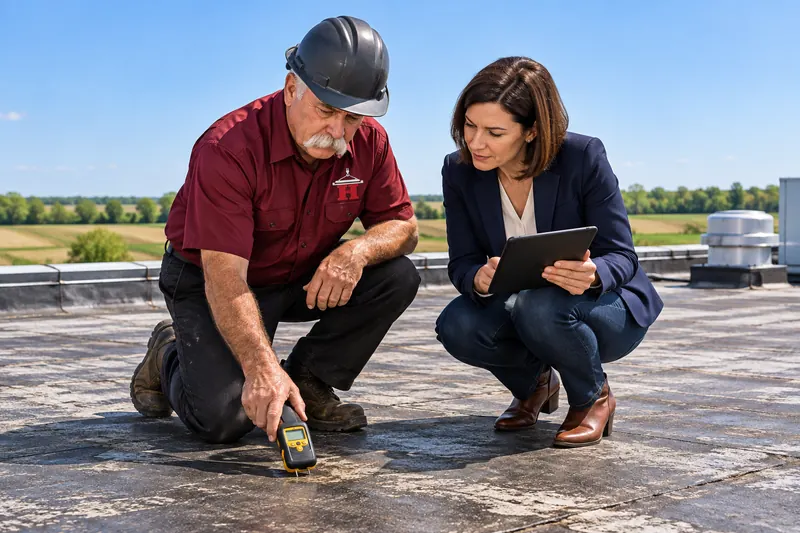
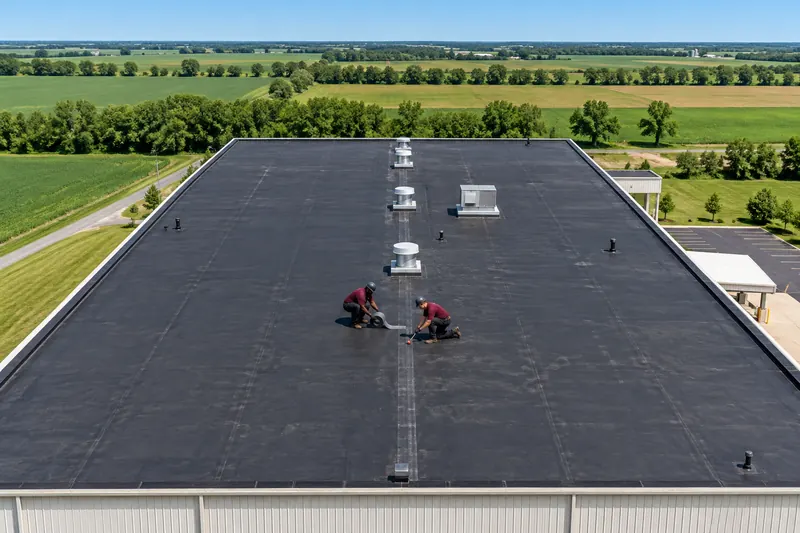
A lap welded too cool on a chilly morning peels back with a fingernail and opens under wind.
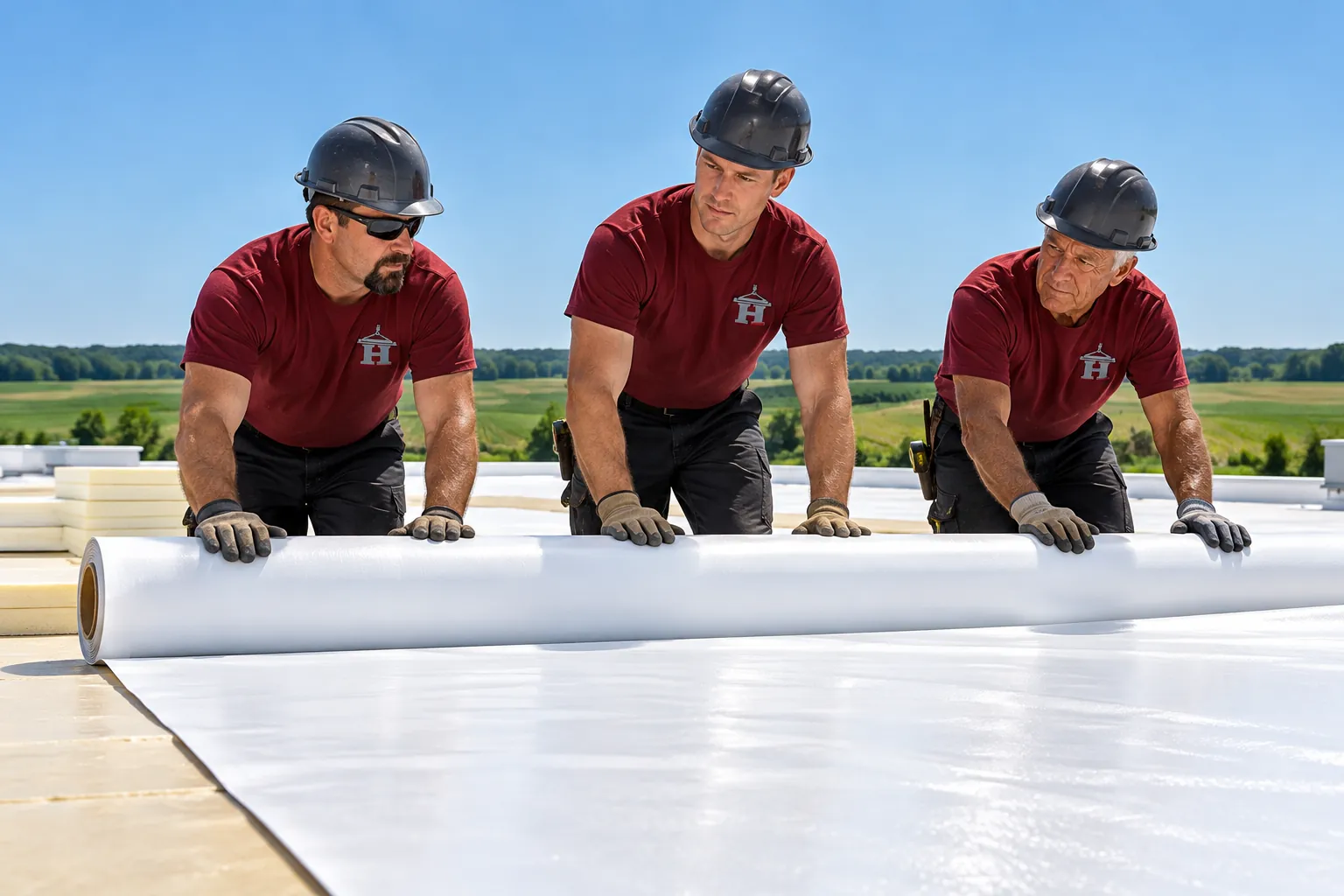
As a Hopkinsville TPO roofing contractor, we install white, hot-air welded TPO membrane on low-slope warehouses, offices, and retail buildings.
A Hopkinsville TPO roofing contractor weighs TPO against EPDM and PVC on every roof. Exposure on the roof points to the right one.
A roof with kitchen or process exhaust fans gets PVC or a grease-resistant detail at those fans, with TPO across the open field.
These are the details we look at first on an existing TPO roof, or on the roof a new TPO system replaces.
A lap welded too cool on a chilly morning peels back with a fingernail and opens under wind.
White membrane laid over level boards holds water in flat valleys between each drain bowl.
Rooftop unit curbs left low after a recover leave too little height to terminate the flashing.
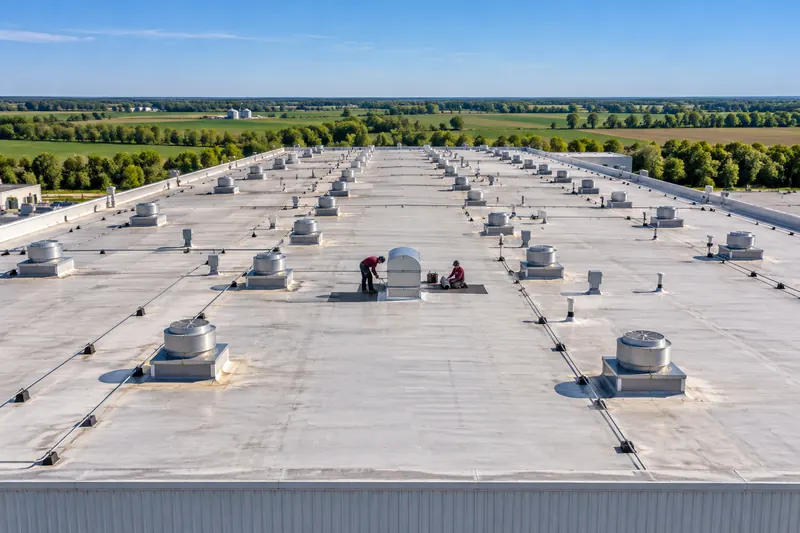
Corners and edges see the highest uplift, and loose fastener rows there let the sheet flutter.
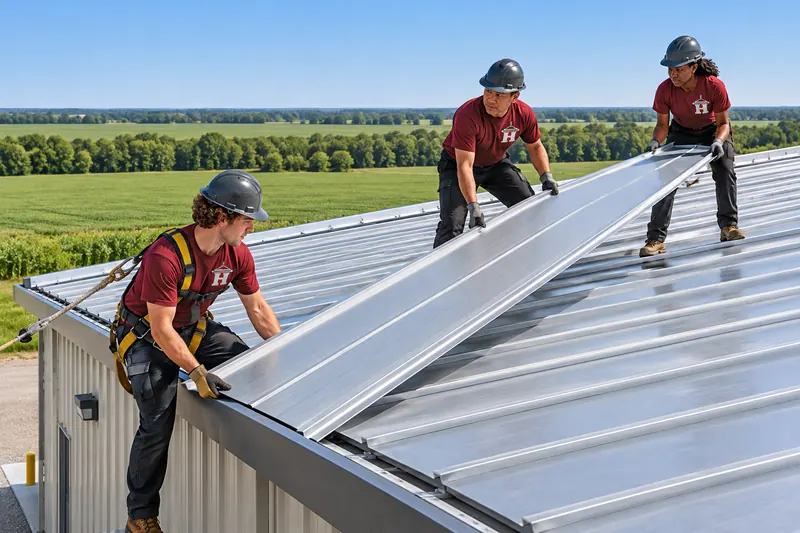
Hand-folded material around pipes cracks at the fold, where a pre-molded boot holds up better.
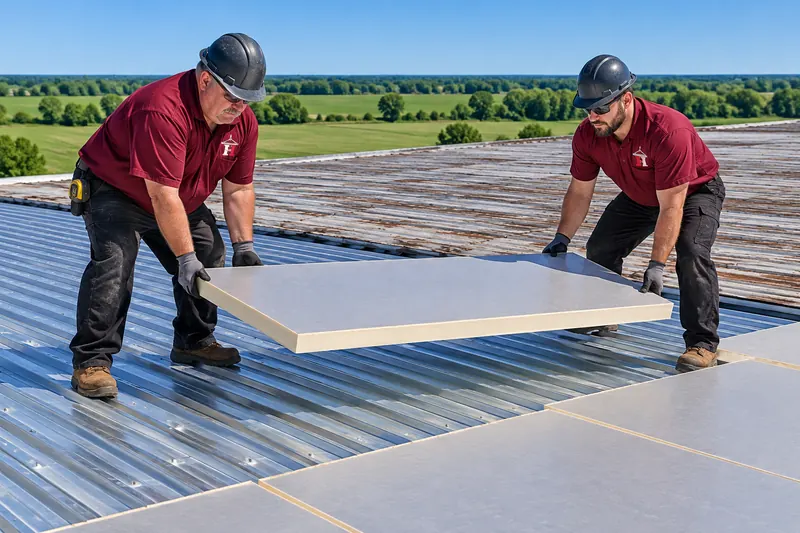
Water piles up on the high side of a skylight curb when no cricket splits it around the frame.
Attachment is the main choice on a TPO roof. Each method holds the sheet against wind in its own way.
Screws and plates set in the seam laps hold the sheet to steel decks, the common pick on large warehouses.
Bonding adhesive across the whole sheet suits irregular roofs, many curbs, and fleece-back membrane.
Sloped boards, crickets at curbs, saddles between drains, and sumps at drain bowls move water off the field.
Molded boots, corners, and curb wraps replace hand folds at the spots where TPO roofs leak first.
Here is how a worn low-slope roof compares with the same deck under new welded TPO.
Ponding on a flat deck is a slope problem, and tapered insulation under new TPO is the usual fix. A roof walk maps the drains first.
Get A Free EstimateFive decisions, in order, from the first walk to the last probed weld.
Core cuts show the layers and moisture, and every drain, curb, and pipe gets located on a roof plan.
Trapped water or an existing recover means tear-off to the deck. A dry, attached roof can take a recover with cover board.
Sloped boards are drawn from the drain locations, with crickets around curbs and saddles between drains.
The sheet is fastened or adhered for the deck, and test welds each cool morning set the welder for the day.
A probe runs the full length of every lap, then curb, pipe, and drain details are checked one by one.
TPO covers most low-slope roofs, and these systems fit the cases it handles less well.
Wide, plain roofs with few penetrations go faster under very large rubber sheets with taped laps.
EPDM roof installationPlant roofs with grease or chemical exhaust call for oil-resistant membrane at the fans.
Industrial plant roofingRoofs that need drainage rebuilt first get tapered boards and new drains before any membrane goes down.
Flat roof drainage and replacementThe TPO questions that come up most, answered for this roof type.
TPO is a white single-ply membrane whose laps are welded with hot air into one sheet. Warehouses, retail centers, offices, schools, and light industrial buildings use it on low-slope roofs, especially ones with many rooftop units and pipes.
TPO and PVC both weld, while EPDM uses primer and seam tape. EPDM comes in larger sheets, and PVC holds up best near grease and oil. Most warehouses and offices land on TPO, and roofs with kitchen exhaust get PVC at the fans.
Mechanical attachment with screws and plates in the laps is the common pick on steel decks. Full adhesion fits irregular roofs and fleece-back sheet. Ballast is rare on TPO. Corner and perimeter fasteners always sit closer than in the field.
Curb flashing is welded to the field sheet and terminated under the curb cap. Pipes get molded boots with steel clamps, corners get pre-formed pieces, and drains are stripped in under the clamping ring. Every weld is probed afterward.
On most flat decks, yes. TPO sheds water only when the surface slopes to a drain or scupper. Sloped boards rise from each drain, crickets split water around curbs, saddles keep valleys moving, and sumps drop the sheet slightly into the drain.
Welder heat and speed change with air temperature. A short test weld at the start of each day gets pulled apart by hand, and a good weld tears the sheet instead of the seam. Those settings then carry over to the laps that follow.
Send the roof size, the drain count, and the rooftop units. We will plan the taper and the welds.
Leave a name and number and we will call you about the roof.
Or call now: (270) 249-6124