Screws
Rust Rings at Fasteners
Cracked washers and raised screw heads show where the panel face started letting water follow the screw.
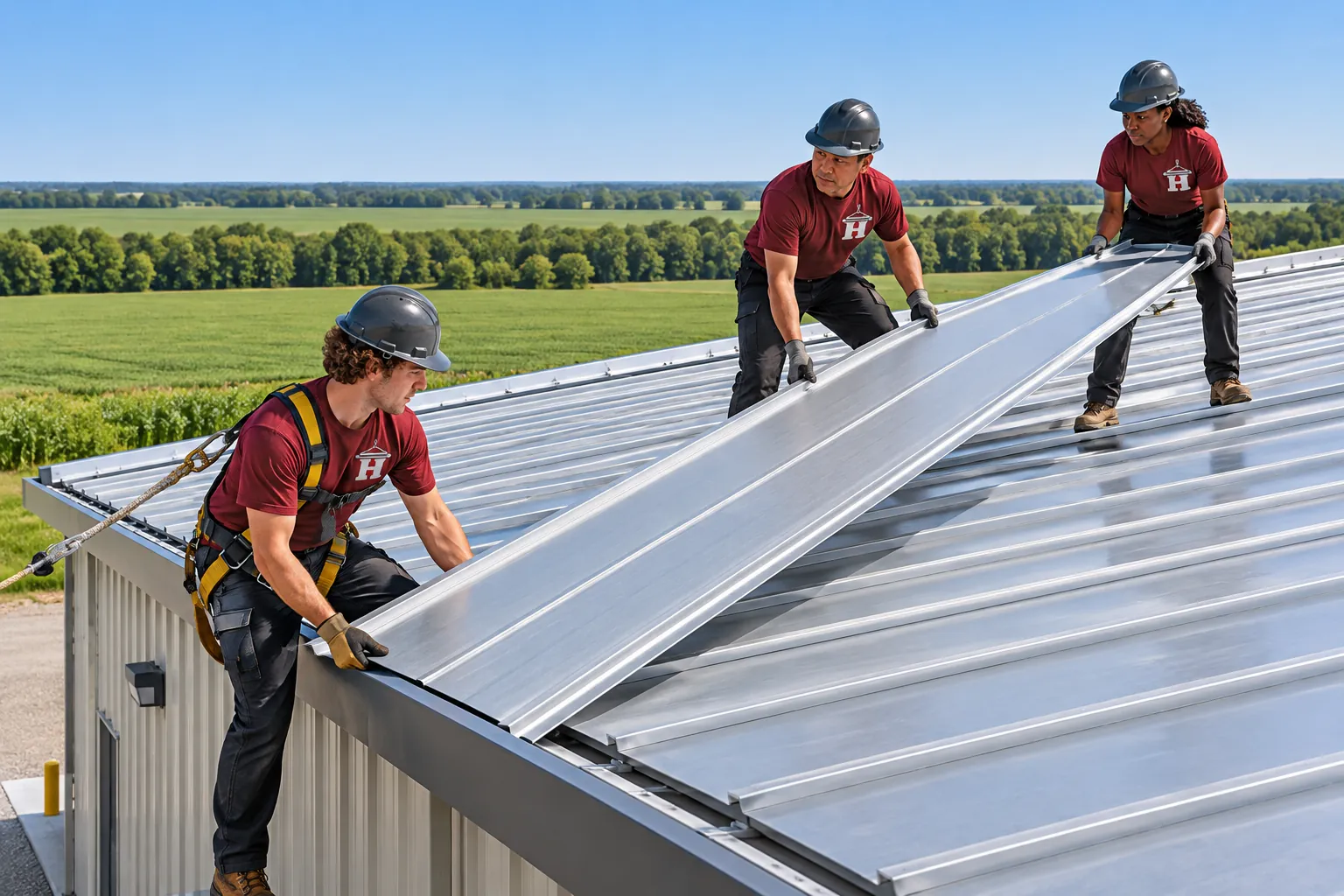
As a Hopkinsville commercial metal roofing contractor, we install, repair, and maintain standing seam and R-panel roofs on shops, plants, and offices.
A Hopkinsville commercial metal roofing contractor sorts metal roofs by how the panels attach. Retrofit framing covers flat roofs going pitched.
Water gets into metal roofs at the trim, closures, and laps. The flat of a panel rarely lets it in.
Cracked washers and raised screw heads show where the panel face started letting water follow the screw.
Sealant tape at end laps tears over years of hot afternoons and cold nights pushing panels back and forth.
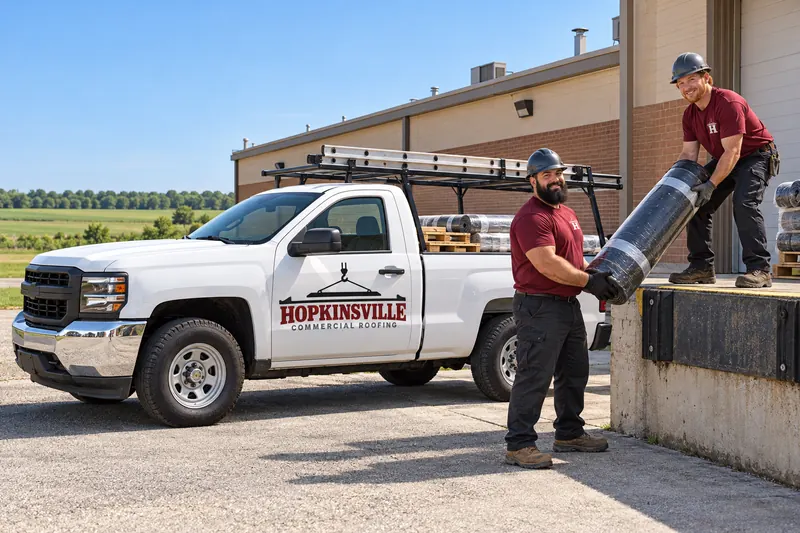
Gaps under the panel ribs at the eave let wind-driven rain and birds into the building.
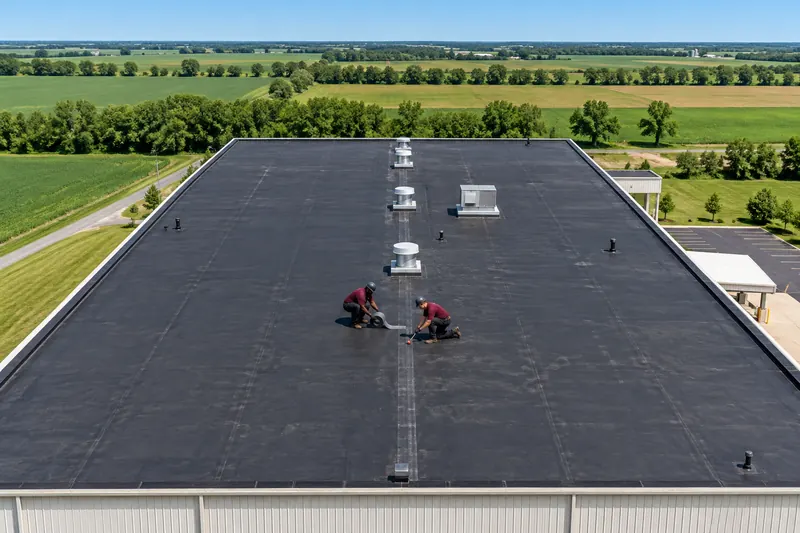
Rubber boots around vent pipes split as they age, leaking in a circle around the pipe.
Pitched panels dump the whole roof at once, so a clogged or undersized gutter spills behind the fascia.
Metal roof work falls into four kinds of jobs. Panel profile, gauge, and finish get chosen with the framing spacing.
Raised seams on floating clips let long panels move with heat, with few exposed screws left to check.
Exposed-fastener panels on pitched framing suit shops, barns, and storage buildings on a tighter budget.
A light-gauge steel frame over a leaking flat roof creates pitch for new panels, with the old roof left in place.
Screws swapped a size larger, rusted sections lapped in, end laps resealed, and gutters cleared twice a year.
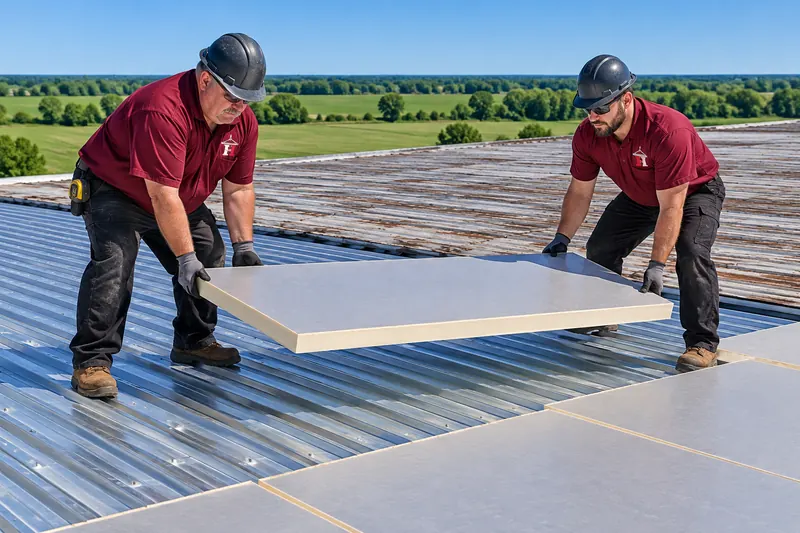
Here is an aging metal roof next to the same building with new panels and trim.
Rust at the screw heads means washers have failed. A walk across the panels shows whether new screws will do or the panels need replacing.
Get A Free EstimateFive decisions, in order, from the first panel walk to the last ridge cap.
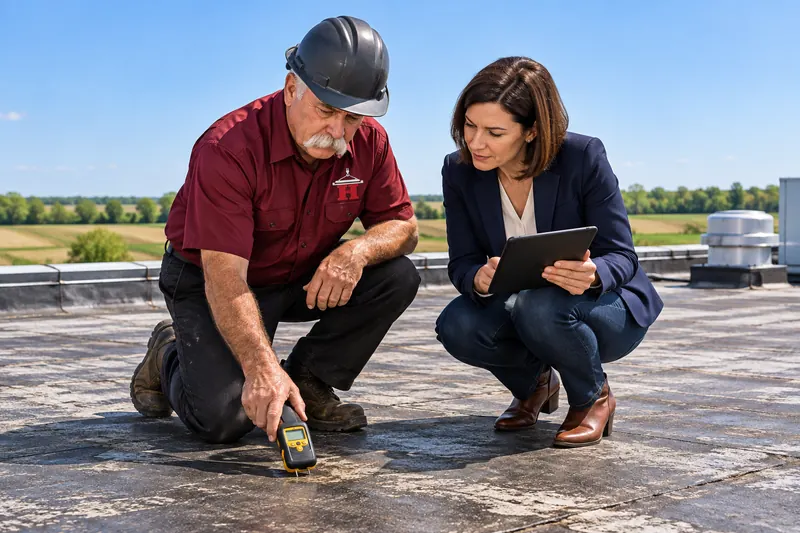
Panels, screws, laps, trim, and gutters get walked, and drips inside are traced to the bay and purlin line above.
Loose screws and a few rusted sections get repaired. Rust-holed panels across the roof point to new metal.
Standing seam or R-panel is chosen with gauge, finish, and framing spacing, or retrofit framing for a flat roof.
Eave closures, ridge caps over profiled closures, end laps with sealant tape, and pipe boots go in as the panels do.
Gutters, downspouts, and outlets are sized to the roof area, and valleys above them get a final check.
Many properties pair a metal building with a low-slope roof. These pages cover the low-slope side.
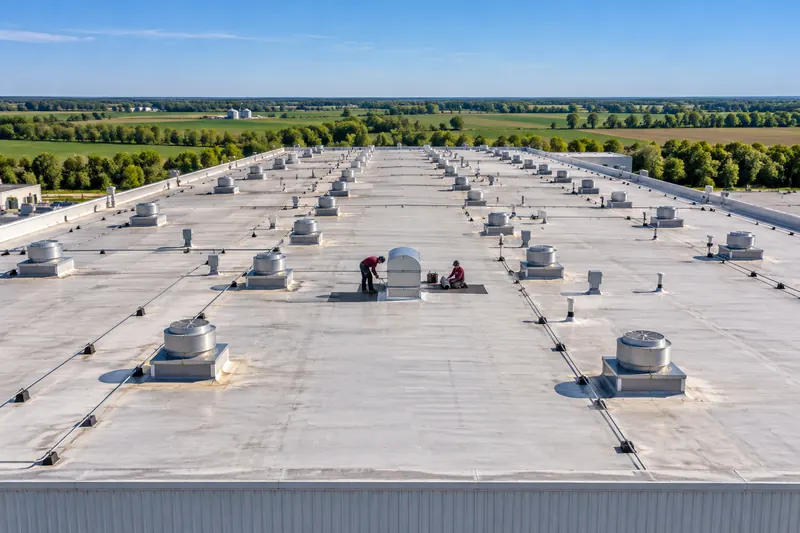
Offices and warehouses beside a metal shop usually carry welded TPO on their low-slope decks.
TPO roofingA flat roof that keeps ponding can be rebuilt with taper, or framed over and turned into metal.
Flat roof rebuildsA handful of leaking screws or one torn end lap gets a repair visit instead of new panels.
Metal roof screw and lap repairMetal roof questions, answered for commercial buildings.
Standing seam suits roofs where hidden fasteners and long service matter, such as offices, schools, and plants. R-panel suits shops and storage buildings with pitched framing and a tighter budget. The difference is mostly how the panels attach.
A light-gauge steel frame built over the old low-slope roof to create pitch. Engineers check the load, purlins are fastened through to the structure, insulation goes in, and panels, ridge caps, trim, and gutters finish the new roof line. Old drains are capped or rerouted.
Closures and trim at the eave, a ridge cap over profiled closures, end laps with sealant tape and stitch screws, rubber pipe boots sealed to the panel, and headwall flashing with counterflashing. Sealant tape runs in a continuous bead at every lap.
Drips are traced to the bay above, stripped screws are replaced a size larger, rust-holed sections are cut out and lapped, end laps and seam ends get fresh butyl tape, and flashing is rebuilt at curbs and walls. Slotted trim holes stay open so panels can move.
Walk-throughs twice a year and after hail or high wind: clear gutters and valleys, check screws for raised heads and rust rings, look over sealant at boots and curbs, and watch ridge caps and closures for lifted edges. Debris removal comes first, since clogged gutters overload in heavy rain.
At each twice-yearly walk and after hail or high wind. Look for raised heads, cracked washers, and rust rings, and replace any backed-out screw with a new one a size larger so it bites fresh steel in the purlin.
Tell us the building, the panel type, and where it drips. We will walk the panels and the trim.
Leave a name and number and we will call you about the roof.
Or call now: (270) 249-6124