Tie-Ins
Joints Between New and Old Sections
Rebuilt wings beside older roofs leave a joint that needs a careful tie-in to stay dry.
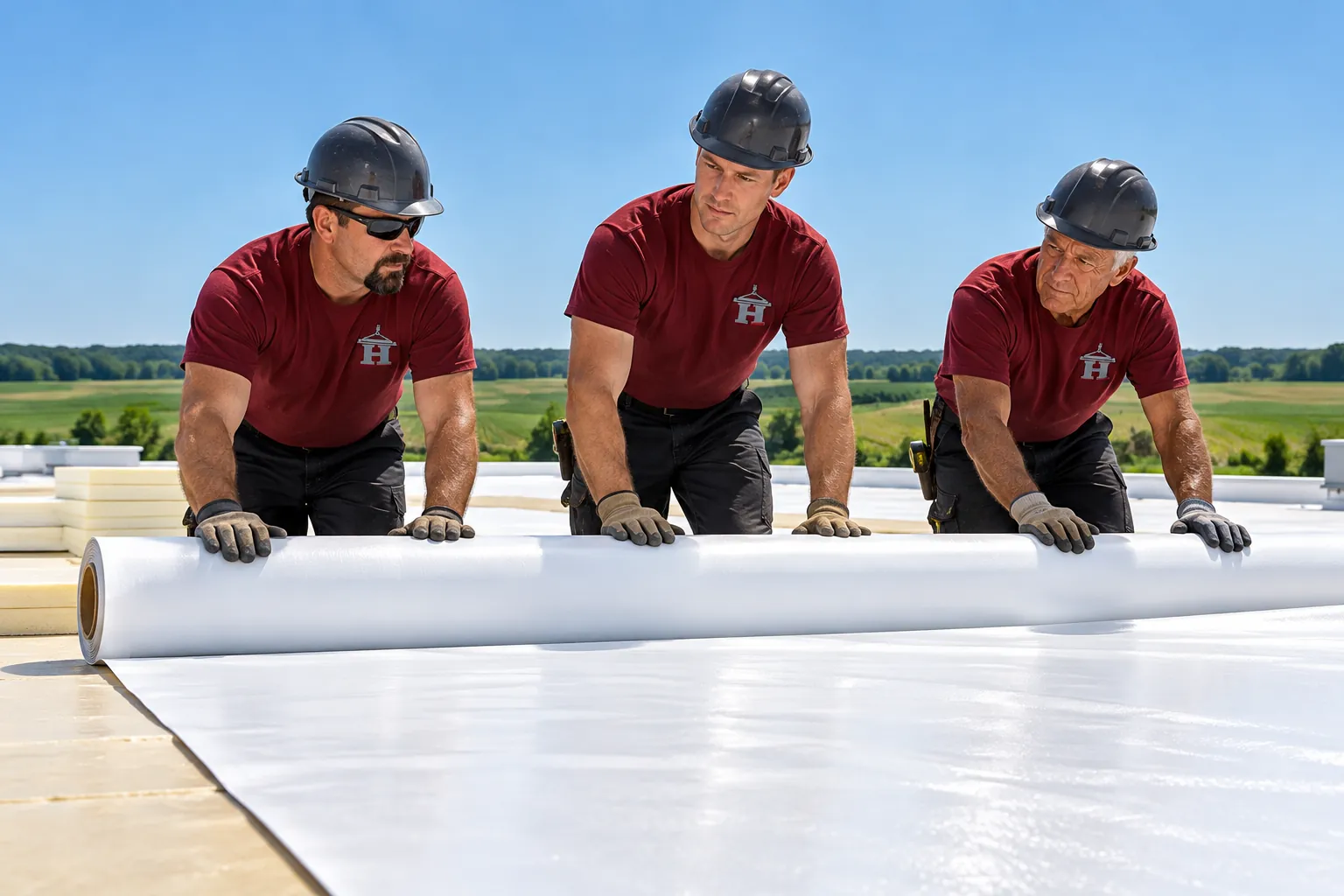
As a Dawson Springs commercial roofing contractor, we build new commercial roofs with corner, perimeter, and edge attachment set for high wind.
A Dawson Springs commercial roofing contractor starts with wind. Dawson Springs took a direct hit from the December 2021 tornado recorded by the National Weather Service, and roofs replaced since then put attachment first.
Wind lifts a roof hardest at its corners and edges, so those areas get the most fasteners, adhesive, and edge metal.
Storm-rebuilt properties bring a few conditions of their own. These get checked on every walk.
Rebuilt wings beside older roofs leave a joint that needs a careful tie-in to stay dry.
A peeled drip edge or coping lets wind under the membrane, where it lifts the sheet from the perimeter in.
Units sitting loose on their curbs shift in high wind and tear the flashing around them.
Corners fastened at field spacing leave the highest-uplift zone with the least hold.
Insulation without a cover board crushes under hail, leaving the sheet sitting in dents that hold water and wear faster than the flat roof around them.
Here is the same roof edge with ordinary attachment and with attachment set for wind.
Wind-focused choices show up in every system we install around Dawson Springs.
Adhered TPO or EPDM holds across the whole sheet instead of only at the laps.
Clip type and spacing on standing seam metal follow the panel wind rating.
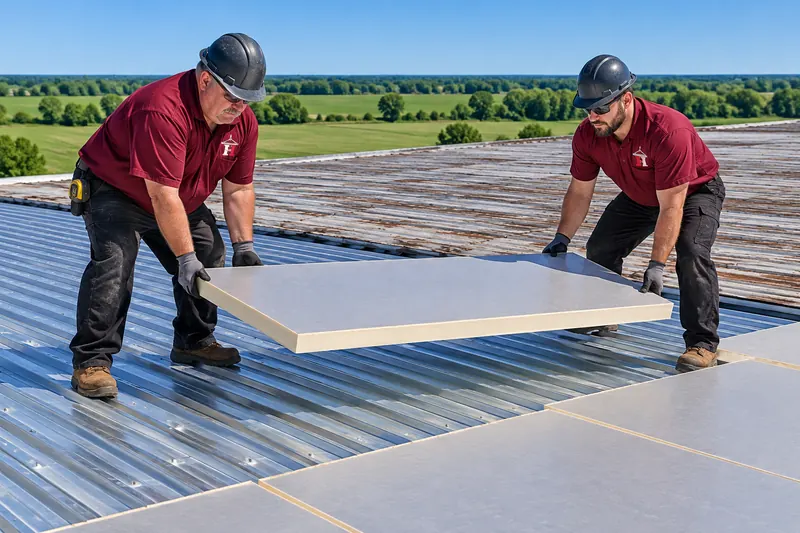
A firm board over the insulation resists hail dents and adds a layer the sheet can hold to.
Leaks at joints between rebuilt and older roofs get a focused repair with new flashing across the joint.
Lifted edge metal lets the next storm get under the membrane. Call before the next front comes through, and note which edge or corner moved and how far.
Call UsFive decisions, in order, with attachment worked out before installation.
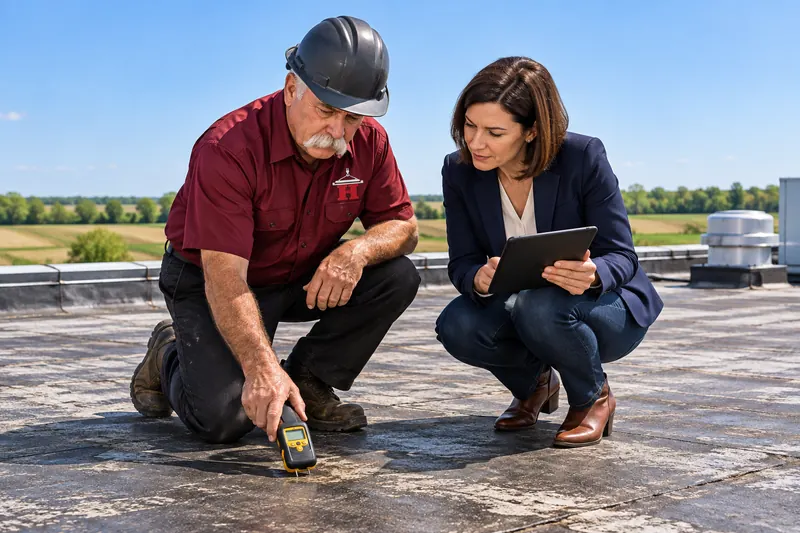
Edges, corners, curbs, and joints between old and new sections get walked, with core cuts in the field.
Corners and perimeter are marked for closer fasteners or full adhesive, since uplift is strongest there.
Every joint between a rebuilt section and an older one gets its own flashing detail.
Edge metal and coping go on at close spacing, and rooftop units get strapped to their curbs.
City offices hear the roof scope first, then the Hopkins County or state inspector named on the DHBC sheet.
We cover Dawson Springs and five other towns out of Hopkinsville. See the rest below, or call us or send us a message about another town.
Questions owners ask about roofs replaced after the 2021 storm.
Roofs replaced since the December 2021 tornado put wind attachment first: adhered or tightly fastened sheet at corners and perimeter, close-spaced edge metal and coping, clips matched to panel ratings, and units strapped to curbs. Permits run through city offices and the Hopkins County or state inspector.
Attachment matched to where uplift is strongest. Corners and edges get closer fasteners or full adhesive, edge metal is fastened tight, and hail and wind ratings on the membrane are checked against the building exposure.
The joint gets its own flashing detail that laps the new roof over the old edge, with an expansion cover where the two sections move differently.
A unit held only by its weight can shift in high wind and tear the curb flashing. Straps hold it in place so the flashing stays sealed.
Yes. It is a firm layer over the insulation that resists dents and gives the membrane a solid surface to hold to.
Yes. The ratings on the specified membrane are checked against the building exposure before ordering, and a cover board adds a firm layer under it that resists hail dents.
When the rest is dry and firmly attached, yes. Core cuts mark the line between the two, and the new section gets a flashed tie-in where it meets the older roof.
Tell us which edges or sections worry you. We will walk the roof and plan the attachment.
Leave a name and number and we will call you about the roof.
Or call now: (270) 249-6124